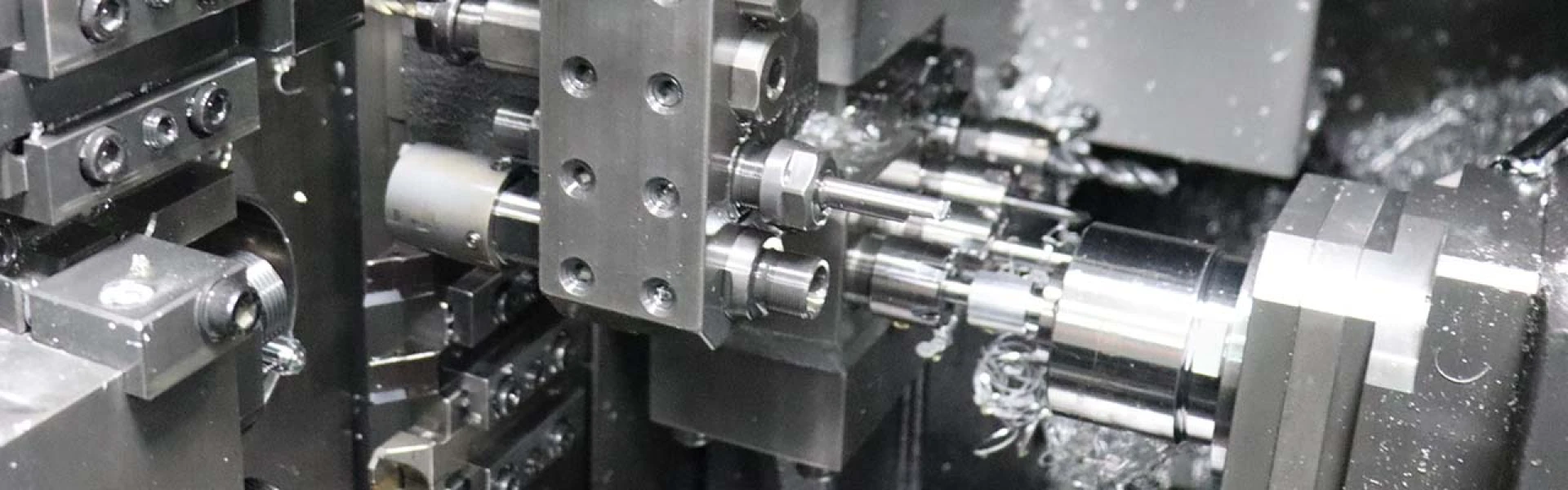
Value-added Services
Value-added services to enhance quality and performance - Huang Liang Precision
Combining precision machining with professional post-processing techniques to create more durable, higher-performance quality products
We not only provide high-precision CNC machining, but also further enhance product quality and performance through a series of value-added services.
These services mainly include three major technical areas:
Precision post-processing services - enhancing detail accuracy and product aesthetics
We offer a variety of additional processing and precision services, such as professional laser engraving services... etc., which can accurately and perfectly meet the needs of every workpiece, providing a range of post-processing options for precision parts.
To meet the needs of different parts and help products achieve the best results in both function and appearance, Huang Liang Precision's post-processing services can enhance your product's market competitiveness.
Grinding
Using the relative movement between abrasive particles and the workpiece surface for finishing, effectively improving smoothness and achieving a high-gloss finish:
● Simple equipment structure, suitable for a variety of machining needs.
● Can achieve extremely high shape accuracy, suitable for parts with high-precision requirements.
● Significantly reduces surface roughness to achieve a smooth surface effect.
● Suitable for machining materials with higher hardness, improving durability.
● Improves the flatness of the workpiece and avoids uneven wear issues.
● Simple equipment structure, suitable for a variety of machining needs.
● Can achieve extremely high shape accuracy, suitable for parts with high-precision requirements.
● Significantly reduces surface roughness to achieve a smooth surface effect.
● Suitable for machining materials with higher hardness, improving durability.
● Improves the flatness of the workpiece and avoids uneven wear issues.
Polishing
Reduces surface roughness through physical or chemical techniques, making the workpiece smooth and enhancing reflectivity, applied in precision machinery and the optical industry:
● Provides a bright, smooth finish, enhancing the workpiece's appearance and texture.
● Enhances the surface reflectivity of the workpiece, suitable for optical products and decorative needs.
● Significantly reduces surface roughness and improves surface quality.
● Electrolytic polishing can significantly improve corrosion resistance and extend service life.
● Improves surface oxidation resistance, suitable for parts used in extreme environments.
● Provides a bright, smooth finish, enhancing the workpiece's appearance and texture.
● Enhances the surface reflectivity of the workpiece, suitable for optical products and decorative needs.
● Significantly reduces surface roughness and improves surface quality.
● Electrolytic polishing can significantly improve corrosion resistance and extend service life.
● Improves surface oxidation resistance, suitable for parts used in extreme environments.
Laser Engraving
Laser engraving uses a laser beam to precisely engrave text or patterns, offering high accuracy and durability, suitable for a variety of materials:
● Applicable to a variety of materials such as metal, plastic, ceramic, and wood, with high precision.
● No ink or drill bits required, avoiding unnecessary waste.
● Engraved patterns do not fade and remain clear and readable over time.
● Highly customizable to meet custom requirements.
● Non-contact processing avoids wear or deformation common in traditional engraving.
● Applicable to a variety of materials such as metal, plastic, ceramic, and wood, with high precision.
● No ink or drill bits required, avoiding unnecessary waste.
● Engraved patterns do not fade and remain clear and readable over time.
● Highly customizable to meet custom requirements.
● Non-contact processing avoids wear or deformation common in traditional engraving.
Thread-locking compound
Primarily used for fastening screws and nuts, this process attaches engineering plastic to the threads and deforms to fix the workpiece during tightening:
● Effectively prevents components from loosening during operation, ensuring product stability.
● Withstands continuous vibration and high loads, suitable for power machinery.
● Reduces failures caused by loose bolts, providing long-lasting locking performance.
● Widely used in automotive, motorcycle, bicycle, and other industries, suitable for high-load and high-stress components.
● Improves anti-loosening performance, especially effective for applications under extreme working conditions (such as high temperature and high pressure).
● Effectively prevents components from loosening during operation, ensuring product stability.
● Withstands continuous vibration and high loads, suitable for power machinery.
● Reduces failures caused by loose bolts, providing long-lasting locking performance.
● Widely used in automotive, motorcycle, bicycle, and other industries, suitable for high-load and high-stress components.
● Improves anti-loosening performance, especially effective for applications under extreme working conditions (such as high temperature and high pressure).
Surface treatment technologies - enhancing product durability and performance
Surface treatment refers to changing the surface properties of a material or applying a protective layer to improve the performance and durability of the base material.
Damage and failure of materials usually begin at the surface, so surface treatment technologies are widely used to enhance corrosion resistance, wear resistance, hardness, and other physical or chemical properties, helping extend product life and improve working efficiency.
Gold plating
Gold plating not only provides an attractive appearance, but also uses the stability of metal to prevent oxidation, thereby extending the service life of components:
● Excellent corrosion resistance, protecting the metal surface from oxidation.
● Low resistance and good solderability, suitable for high-frequency electronic devices.
● Stable resistance value, suitable for applications that require high stability during long-term operation.
● Excellent corrosion resistance, protecting the metal surface from oxidation.
● Low resistance and good solderability, suitable for high-frequency electronic devices.
● Stable resistance value, suitable for applications that require high stability during long-term operation.
Nickel plating
Forms a protective oxide film on the metal surface, improving its corrosion resistance and hardness, especially suitable for various mechanical and electronic components:
● Outstanding corrosion resistance, suitable for long-term use in harsh environments.
● Enhanced surface hardness and wear resistance, extending part service life.
● Attractive bright finish, suitable for products with decorative and functional requirements.
● Outstanding corrosion resistance, suitable for long-term use in harsh environments.
● Enhanced surface hardness and wear resistance, extending part service life.
● Attractive bright finish, suitable for products with decorative and functional requirements.
Chrome plating
Not only provides a decorative effect on metal surfaces, but also enhances durability and corrosion resistance, widely used in the automotive and home appliance fields:
● Outstanding corrosion resistance and wear resistance, suitable for outdoor applications.
● Reduces friction and extends part life.
● Improves product appearance and surface hardness, enhancing durability.
● Outstanding corrosion resistance and wear resistance, suitable for outdoor applications.
● Reduces friction and extends part life.
● Improves product appearance and surface hardness, enhancing durability.
Tin plating
Primarily used to prevent metal oxidation, widely applied to electronic components, especially wires and connectors, ensuring stability:
● Prevents oxidation, maintaining good conductivity and stable current transmission.
● Improves wear resistance and extends component service life.
● Improves solderability, ensuring the reliability and stability of electronic devices.
● Prevents oxidation, maintaining good conductivity and stable current transmission.
● Improves wear resistance and extends component service life.
● Improves solderability, ensuring the reliability and stability of electronic devices.
Anodizing
An effective metal surface treatment technology that can significantly improve metal corrosion resistance and hardness, while also providing a variety of color effects:
● Significantly enhances corrosion resistance and extends the service life of metal parts.
● Improves surface adhesion and enhances subsequent coating results.
● Environmentally friendly and harmless, with no release of harmful substances during processing.
● Significantly enhances corrosion resistance and extends the service life of metal parts.
● Improves surface adhesion and enhances subsequent coating results.
● Environmentally friendly and harmless, with no release of harmful substances during processing.
Passivation
Forms a protective oxide layer on the stainless steel surface, effectively preventing corrosion and extending service life:
● Forms a rust-preventive layer to protect metal from external environmental damage.
● Enhances corrosion resistance and reduces maintenance requirements.
● Improves metal surface hardness, extending service life and wear resistance.
● Forms a rust-preventive layer to protect metal from external environmental damage.
● Enhances corrosion resistance and reduces maintenance requirements.
● Improves metal surface hardness, extending service life and wear resistance.
PTFE treatment
Utilizes the special properties of polytetrafluoroethylene to improve the performance of metal or other substrates, widely used in automotive, medical, and other fields:
● Low friction coefficient, effectively reducing wear.
● Excellent high-temperature resistance and strong stability.
● Widely used in medical and food applications, ensuring health and safety.
● Low friction coefficient, effectively reducing wear.
● Excellent high-temperature resistance and strong stability.
● Widely used in medical and food applications, ensuring health and safety.
Coloring treatment
Changes the appearance of metal through chemical treatment while also improving its corrosion resistance:
● Does not significantly change the metal dimensions, maintaining accuracy.
● Enhances corrosion resistance and improves product durability.
● Highly environmentally friendly, uses fewer chemicals, and is environmentally friendly.
● Does not significantly change the metal dimensions, maintaining accuracy.
● Enhances corrosion resistance and improves product durability.
● Highly environmentally friendly, uses fewer chemicals, and is environmentally friendly.
PVD Physical Vapor Deposition
Can deposit thin films on metal surfaces to improve surface hardness and wear resistance, widely used for surface treatment of tools and mechanical parts:
● Improves surface hardness and enhances wear resistance.
● Improves corrosion resistance and extends component service life.
● Enhances surface smoothness and improves mechanical performance.
● Improves surface hardness and enhances wear resistance.
● Improves corrosion resistance and extends component service life.
● Enhances surface smoothness and improves mechanical performance.
Hot-dip galvanizing
Prevents corrosion by immersing steel parts in molten zinc, suitable for various construction and engineering fields:
● Provides strong corrosion resistance and adapts to a variety of harsh environments.
● Reduces costs and offers a cost advantage compared with other anti-corrosion methods.
● Maintenance-free, requiring no additional upkeep during long-term use.
● Provides strong corrosion resistance and adapts to a variety of harsh environments.
● Reduces costs and offers a cost advantage compared with other anti-corrosion methods.
● Maintenance-free, requiring no additional upkeep during long-term use.
Coating
Can change the surface properties of metal or other materials, enhancing corrosion resistance, wear resistance, and appearance, widely used in multiple industries:
● Enhances the corrosion resistance and wear resistance of parts.
● Coating thickness can be precisely controlled to ensure uniformity.
● Improves appearance and aesthetic effect while also providing additional functionality.
● Enhances the corrosion resistance and wear resistance of parts.
● Coating thickness can be precisely controlled to ensure uniformity.
● Improves appearance and aesthetic effect while also providing additional functionality.
TiN Titanium Nitride
Provides ultra-high hardness and wear resistance, commonly used as a protective coating for metal substrates, especially suitable for high-load environments:
● High hardness and wear resistance, suitable for heavy-duty applications.
● Good heat resistance and high-temperature stability.
● Gold appearance with both decorative and functional benefits.
● High hardness and wear resistance, suitable for heavy-duty applications.
● Good heat resistance and high-temperature stability.
● Gold appearance with both decorative and functional benefits.
Heat treatment technologies - improving product hardness and toughness
Heat treatment technologies refer to changing the physical properties of materials through heating and cooling processes. By precisely controlling temperature and treatment time, the hardness, toughness, wear resistance, and other mechanical properties of metals can be significantly improved.
This technology not only improves material durability, but also enhances its stability under extreme working conditions, making it an indispensable step in the manufacture of many critical industrial components.
Salt bath ferritic nitrocarburizing
Salt bath ferritic nitrocarburizing is a low-temperature salt bath nitrocarburizing technology, such as LCN, Tufftride, Isonite.
It can form a high-hardness, self-lubricating diffusion layer on the surface of steel, improving wear resistance and anti-seizure performance, and is used for piston rods, gears, and valve parts:
● Improves surface hardness and wear resistance, extending part life.
● Enhances fatigue resistance and corrosion resistance, adapting to harsh working environments.
● Very small dimensional change after treatment, suitable for precision parts machining.
It can form a high-hardness, self-lubricating diffusion layer on the surface of steel, improving wear resistance and anti-seizure performance, and is used for piston rods, gears, and valve parts:
● Improves surface hardness and wear resistance, extending part life.
● Enhances fatigue resistance and corrosion resistance, adapting to harsh working environments.
● Very small dimensional change after treatment, suitable for precision parts machining.
Ferritic nitrocarburizing
Nitrocarburizing technology forms a hard compound layer and diffusion layer on the surface of steel, and is widely used in automotive, mold, and high-load precision parts:
● Improves surface hardness and wear resistance, extending part life.
● Enhances fatigue resistance and corrosion resistance, adapting to high-load environments.
● Very small dimensional change after treatment, maintaining part accuracy.
● Improves surface hardness and wear resistance, extending part life.
● Enhances fatigue resistance and corrosion resistance, adapting to high-load environments.
● Very small dimensional change after treatment, maintaining part accuracy.
Sinter polishing treatment
A surface hardening technology combining nitriding, mechanical polishing, and oxidation treatment, effectively improving steel corrosion resistance, wear resistance, and surface appearance:
● Improves surface hardness and wear resistance, enhancing durability.
● Enhances corrosion resistance, adapting to harsh environments.
● The treated surface is smooth and bright, improving appearance and lubricity.
● Improves surface hardness and wear resistance, enhancing durability.
● Enhances corrosion resistance, adapting to harsh environments.
● The treated surface is smooth and bright, improving appearance and lubricity.
Carburizing
Carburizing is the process of diffusing carbon into the surface of steel at high temperature to improve the surface hardness and wear resistance of low-carbon steel while maintaining internal toughness:
● Improves surface hardness and wear resistance, enhancing service life.
● Enhances fatigue resistance and tensile strength, suitable for high-load environments.
● After treatment, it can be combined with quenching and tempering to further improve performance.
● Improves surface hardness and wear resistance, enhancing service life.
● Enhances fatigue resistance and tensile strength, suitable for high-load environments.
● After treatment, it can be combined with quenching and tempering to further improve performance.
High-frequency quenching
Uses high-frequency current to rapidly heat the steel surface, suitable for parts requiring localized hardening, and can effectively improve surface hardness and wear resistance:
● Achieves localized surface hardening while the interior remains tough.
● Improves surface hardness and wear resistance, extending part life.
● Fast processing speed, suitable for mass production.
● Achieves localized surface hardening while the interior remains tough.
● Improves surface hardness and wear resistance, extending part life.
● Fast processing speed, suitable for mass production.
Annealing
Heats and slowly cools steel, suitable for various types of steel, and can effectively improve machinability and internal stress:
● Improves ductility and toughness, enhancing processing performance.
● Releases internal stress and prevents deformation.
● Produces a specific microstructure to adjust material properties.
● Improves ductility and toughness, enhancing processing performance.
● Releases internal stress and prevents deformation.
● Produces a specific microstructure to adjust material properties.
Normalizing
Heats steel to an appropriate temperature and then cools it in air, suitable for various types of steel, and can effectively improve grain structure and internal stress:
● Improves the ductility and softness of hardened steel.
● Provides a more uniform foundation for subsequent heat treatment, improving material uniformity.
● Eliminates internal residual stress and improves material stability.
● Improves the ductility and softness of hardened steel.
● Provides a more uniform foundation for subsequent heat treatment, improving material uniformity.
● Eliminates internal residual stress and improves material stability.
Quench and temper treatment
By heating and cooling steel, suitable for medium-carbon steel, it can effectively improve mechanical properties and durability:
● Makes the material structure more uniform and improves overall properties.
● Increases material strength and toughness while maintaining good machinability.
● Improves wear resistance and extends component service life.
● Makes the material structure more uniform and improves overall properties.
● Increases material strength and toughness while maintaining good machinability.
● Improves wear resistance and extends component service life.
Gas carburizing
This technology heats steel in a carbon-containing gas environment and is suitable for various types of steel, effectively improving surface hardness and wear resistance:
● Fast processing speed, shortening production time.
● Precisely controls the thickness and uniformity of the carburized layer to meet different requirements.
● Improves surface strength and extends service life.
● Fast processing speed, shortening production time.
● Precisely controls the thickness and uniformity of the carburized layer to meet different requirements.
● Improves surface strength and extends service life.
Carbonitriding
A heat treatment technology combining carbon and nitrogen to strengthen surface hardness and improve fatigue and impact strength, suitable for parts with high surface performance requirements:
● Significantly improves hardness and wear resistance, suitable for heavy-load applications.
● Enhances fatigue and impact strength, improving resistance to high loads.
● Suitable for steels that are difficult to harden on the surface, such as valve seats, gears, and other precision parts.
● Significantly improves hardness and wear resistance, suitable for heavy-load applications.
● Enhances fatigue and impact strength, improving resistance to high loads.
● Suitable for steels that are difficult to harden on the surface, such as valve seats, gears, and other precision parts.
Quenching
Uses rapid cooling to strengthen the surface hardness and mechanical strength of steel parts, suitable for applications requiring high wear resistance and high load capacity:
● Improves surface hardness and wear resistance, increasing part life.
● Suitable for high-strength applications such as gears and bearings.
● Combined with tempering, it can control brittleness and improve overall toughness and stability.
● Improves surface hardness and wear resistance, increasing part life.
● Suitable for high-strength applications such as gears and bearings.
● Combined with tempering, it can control brittleness and improve overall toughness and stability.
Tempering
Reheats steel after quenching to reduce brittleness and improve toughness and stability. It is a key step in enhancing mechanical properties and precision:
● Reduces brittleness and improves the steel's ductility and impact resistance.
● Relieves quenching stress and prevents deformation and cracking.
● Improves dimensional stability and machinability.
● Reduces brittleness and improves the steel's ductility and impact resistance.
● Relieves quenching stress and prevents deformation and cracking.
● Improves dimensional stability and machinability.
Metallographic analysis
Uses microscopic techniques to observe the internal structure of metals and evaluate material properties and process quality. It is a key tool for material development and inspection analysis:
● Analyzes crystal structure and particle size to predict mechanical properties.
● Evaluates material defects and corrosion conditions to ensure safe use.
● Provides a scientific basis for process design and quality control.
● Analyzes crystal structure and particle size to predict mechanical properties.
● Evaluates material defects and corrosion conditions to ensure safe use.
● Provides a scientific basis for process design and quality control.